Your shopping cart
😊 Product added to cart successfully
Product removed to cart successfully

Breed Traits & Characteristics
Bullmastiffs are a large breed with heavy bone. Breeders strive to adhere to the standard and to avoid overdone animals. In order to do the job of a guard dog, this working breed must be mentally and physically sound. Responsible Bullmastiff breeders support the American Bullmastiff Association Health & Research Committee, and screen their breeding stock for cardiac issues, hip and elbow dysplasia, hypothyroidism and eye problems. Like many dogs, both purebred and not, Bullmastiffs can develop cancer as well as bloat, a sudden and life-threatening swelling of the abdomen; owners should educate themselves about its symptoms and what to do should bloat occur. Heredity and environment play roles in the health of the breed, so breeders and owners must work together in order to breed and raise healthy dogs.
Seasonal shedding is to be expected, though unusual hair loss should be noted as a possible problem. A balanced diet and a healthy environment are most important for coat health. Frequent grooming ensures that shedding can be managed, and dogs should be bathed as needed. The skin and coat should be monitored in order to ensure that dryness or oiliness are not issues. These can be related to diet, and sometimes to allergies.
Bullmastiffs enjoy daily exercise. Some are more sedentary, while others are very active by nature, but moderate exercise should be encouraged. Brisk walks and outdoor play are favorites of the breed, although secure fencing is a must for outdoor areas. Fencing is critical to ensure that the dog is safely contained and so strangers and unfamiliar animals do not intrude on the Bullmastiff's territory. Puppies should not be overexercised, especially during periods of rapid growth. Bullmastiffs are not the ideal breed for people who want a canine running partner, but they are great walking companions.
Early training and socialization are critical for Bullmastiff puppies. The breed can be quite strong willed, and dogs and owners will both benefit from training regimens instilled in puppyhood. Rules and routines should be put in place early and adhered to as dogs grow up. Many breeders will encourage new owners to enroll in local puppy classes in order to ensure that puppies are exposed to other dogs and that owners have access to training assistance and information. Bullmastiffs can excel in agility, obedience, rally, even scent work and tracking, so training should begin immediately and be a part of the lifelong bond between dog and owner.
Most Bullmastiff breeders advise feeding adult dog food or large-breed puppy food for puppies in order to ensure slow and steady growth. Several small meals are best for puppies, and two meals daily is a good routine for adults, so dogs don't have to digest too much food at each meal. Because of the risk of bloat, exercise is discouraged immediately before and after eating. Bullmastiffs should be kept lean, especially as puppies, as they grow very rapidly, which can tax their systems.
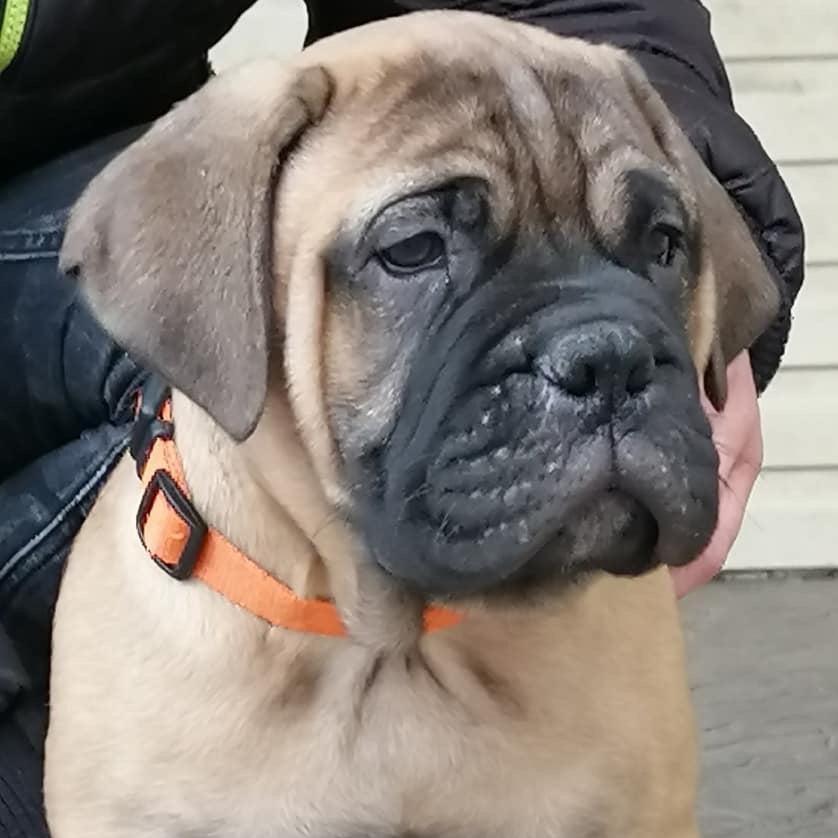
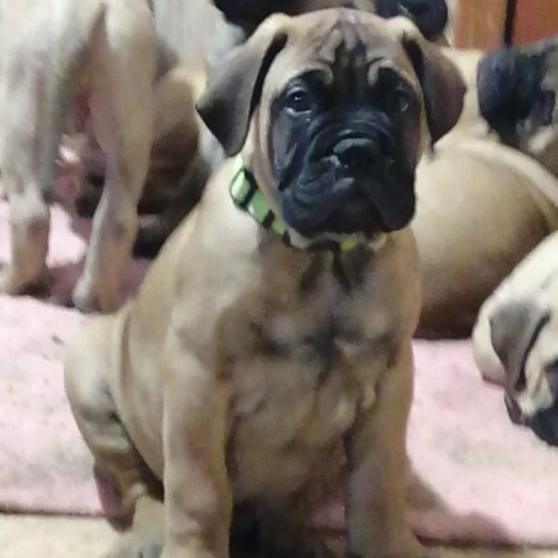
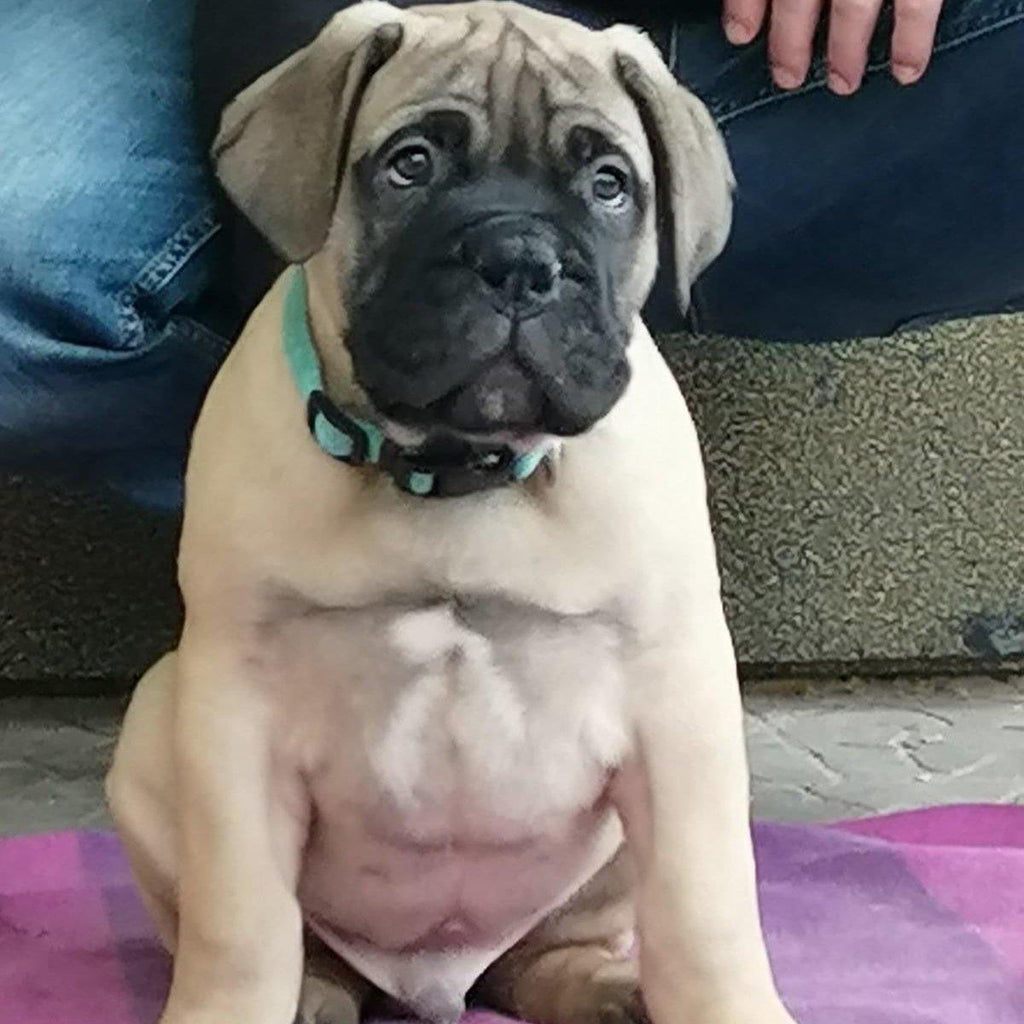
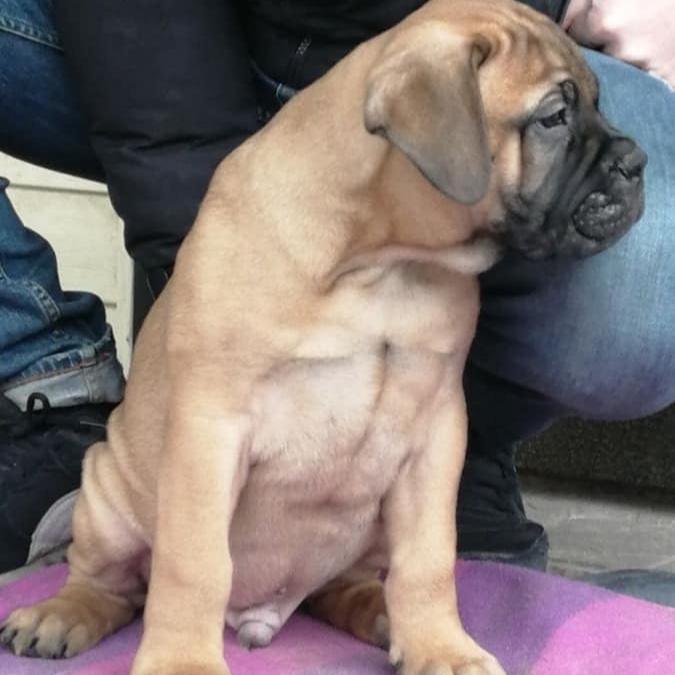
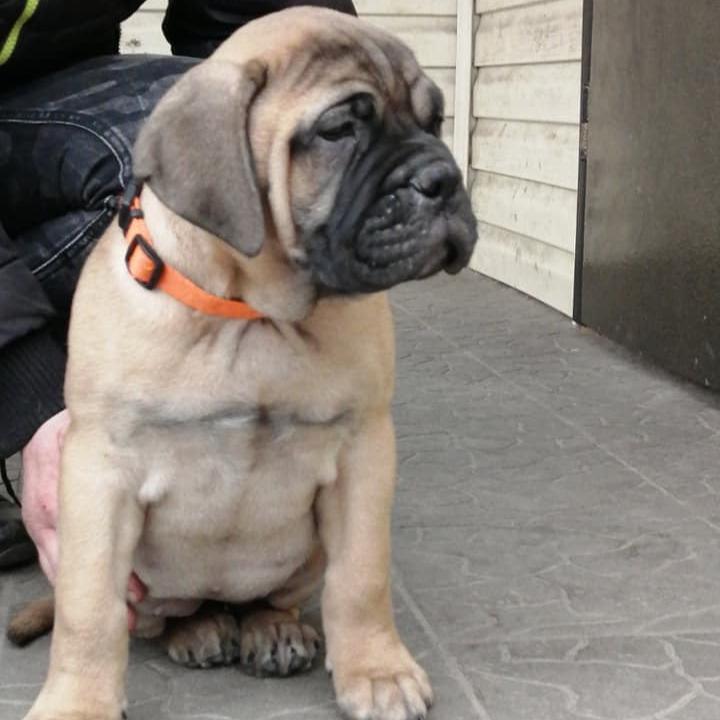
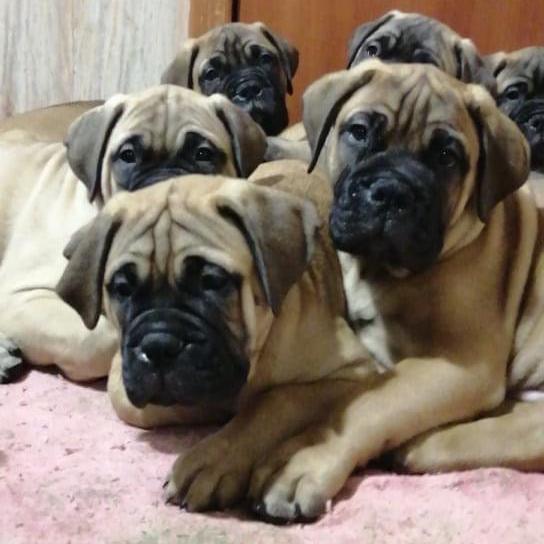
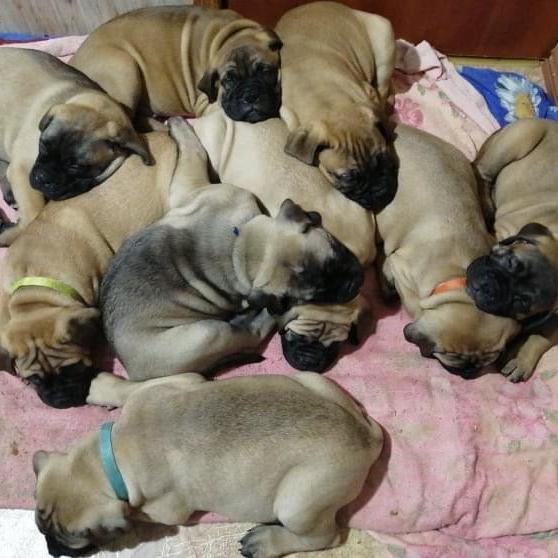
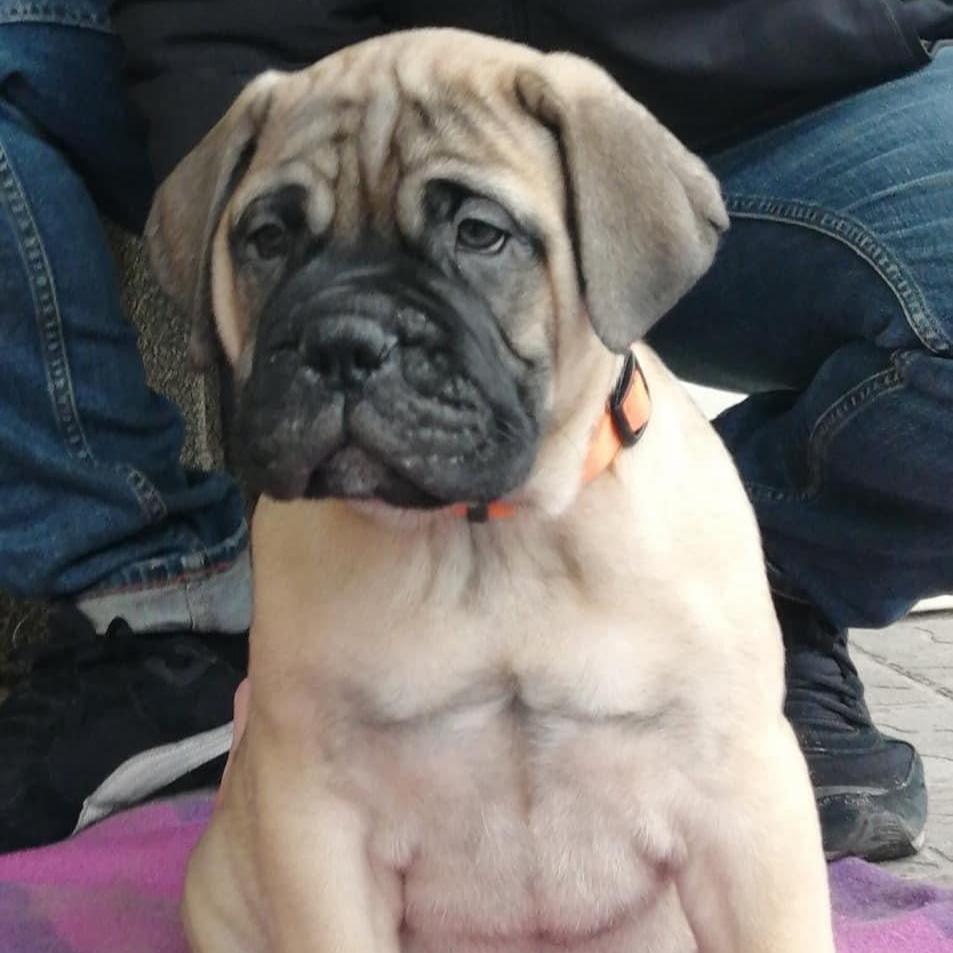
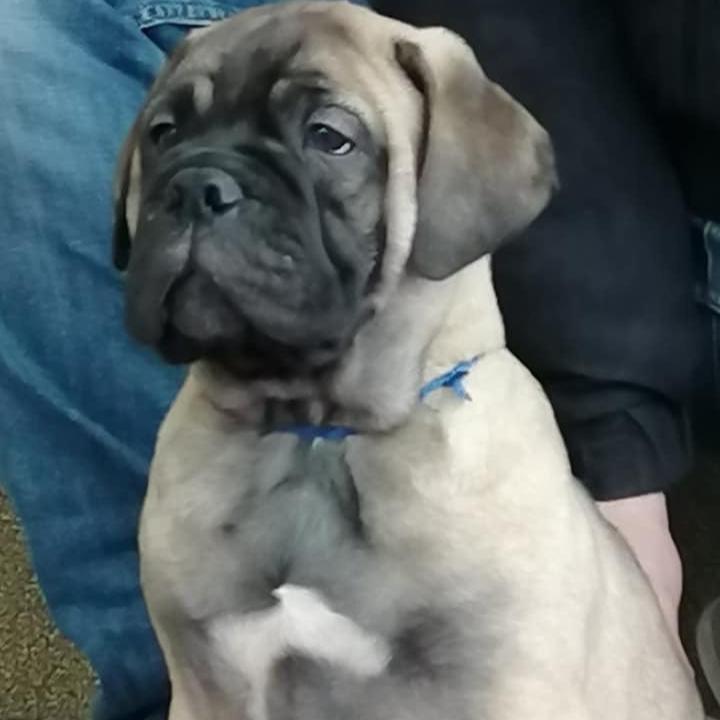
Fearless at work, docile at home, the Bullmastiff is a large, muscular guarder who pursued and held poachers in Merry Old England' merry, we suppose, for everyone but poachers. Bullmastiffs are the result of Bulldog and Mastiff crosses.
|
|
|
|
|
Male |
Male |
Male |
|
Female |
Female |
Female |
The Bullmastiff isn't quite as large as his close cousin the Mastiff. Still, standing as high as 27 inches at the shoulder and weighing between 100 and 130 pounds, this is still a whole lot of dog. After the first impression made by the Bullmastiff's size, it is the large, broad head that conveys the breed's essence: the dark eyes, high-set V-shaped ears, and broad, deep muzzle all combine to present the intelligence, alertness, and confidence that make the Bullmastiff a world-class protector and family companion. Coats come in fawn, red, or brindle. These are biddable and reliable creatures, but as with any large guarding dog, owners must begin training and socialization early, while the puppy is still small enough to control.
Owning a dog is not just a privilege; it’s a responsibility. They depend on us for, at minimum, food and shelter, and deserve much more. When you take a dog into your life, you need to understand the commitment that dog ownership entails.